A key-value database, or key-value store, is a data storage paradigm designed for storing, retrieving, and managing associative arrays, a data structure more commonly known today as a dictionary. Dictionaries contain a collection of objects, or records, which in turn have many different fields within them. These records are stored and retrieved using a key that uniquely identifies the record, and is used to find the data within the database. Key-value databases differ from the better known relational databases (RDB). RDBs pre-define the data structure in the database as a series of tables containing fields with well-defined data types. Exposing the data types to the database program allows it to apply various optimizations. In contrast, key-value systems treat the value as opaque to the database itself, and typically support only simple operations such as storing, retrieving, updating, and deleting a value by its key. This offers considerable flexibility and makes such systems well suited to low-latency, high-throughput workloads dominated by direct key lookups, but less suitable for applications that require complex queries or explicit relationships among records. A lack of standardization, limited transaction support, and relatively simple query interfaces long restricted many key-value systems to specialized uses, but the rapid move to cloud computing after 2010 helped drive renewed interest in them as part of the broader NoSQL movement. Some graph databases, such as ArangoDB, are also key–value databases internally, adding the concept of relationships (pointers) between records as a first-class data type. == Types and examples == Key–value systems span a wide consistency spectrum, from eventually consistent designs to strongly consistent or serializable ones, and some allow the consistency level to be configured as part of the trade-off against latency and availability. Renewed interest in key–value and other NoSQL systems was driven in part by the demands of big data, distributed, and cloud applications. Their scalability and availability made them attractive for cloud data management, although limited transaction support, low-level query interfaces, and the lack of standardization remained obstacles to wider adoption. Some maintain data in memory (RAM), while others employ solid-state drives or rotating disks. Some key–value systems add additional structure to their keys. For example, Oracle NoSQL Database organizes records using composite keys with "major" and "minor" components, an arrangement that Oracle compares to a directory-path structure in a file system. More generally, however, key–value stores are defined by their use of unique keys associated with opaque values and by their emphasis on simple key-based operations. Unix included dbm (database manager), a minimal database library written by Ken Thompson for managing associative arrays with a single key and hash-based access. Later implementations and related libraries included sdbm, GNU dbm (gdbm), and Berkeley DB. A more recent example is RocksDB, a persistent key–value storage engine developed at Facebook and designed for large-scale applications. Other examples include in-memory systems such as Memcached and Redis, and persistent systems such as Berkeley DB, Riak, and Voldemort.
TinEye
TinEye is a reverse image search engine developed and offered by Idée, Inc., a company based in Toronto, Ontario, Canada. It was the first image search engine on the web to use image identification technology rather than keywords, metadata or watermarks. TinEye allows users to search not using keywords but with images. Upon submitting an image, TinEye creates a "unique and compact digital signature or fingerprint" of the image and matches it with other indexed images. This procedure is able to match even heavily edited versions of the submitted image, but will not usually return similar images in the results. == History == Idée, Inc. was founded by Leila Boujnane and Paul Bloore in 1999. Idée launched the service on May 6, 2008 and went into open beta in August that year. While computer vision and image identification research projects began as early as the 1980s, the company claims that TinEye is the first web-based image search engine to use image identification technology. The service was created with copyright owners and brand marketers as the intended user base, to look up unauthorized use and track where the brands are showing up respectively. In June 2014, TinEye claimed to have indexed more than five billion images for comparisons. However, this is a relatively small proportion of the total number of images available on the World Wide Web. As of September 2025, TinEye's search results claim to have over 77.6 billion images indexed for comparison. == Technology == A user uploads an image to the search engine (the upload size is limited to 20 MB) or provides a URL for an image or for a page containing the image. The search engine will look up other usage of the image in the internet, including modified images based upon that image, and report the date and time at which they were posted. TinEye does not recognize outlines of objects or perform facial recognition, but recognizes the entire image, and some altered versions of that image. This includes smaller, larger, and cropped versions of the image. TinEye has shown itself capable of retrieving different images from its database of the same subject, such as famous landmarks. TinEye is capable of searching for images in JPEG, PNG, WebP, GIF, BMP and TIFF format. Results generated from TinEye include the total number of matches in their database, a preview image, and the URL to each match. TinEye can sort results by best match, most changed, biggest image, newest, and oldest. User registration is optional and offers storage of the user's previous queries. Other features include embeddable widgets and bookmarklets. TinEye has also released their commercial API. == Usage == TinEye's ability to search the web for specific images (and modifications of those images) makes it a potential tool for the copyright holders of visual works to locate infringements on their copyright. It also creates a possible avenue for people who are looking to make use of imagery under orphan works to find the copyright holders of that imagery. Being that orphan works can be defined as "copyrighted works whose owners are difficult or impossible to identify and/or locate," the use of TinEye could potentially remove the orphan work status from online images that can be found in its database. === Fact-checking === It has been recommended by fact-checkers as a useful resource in attempts to verify the origin of images. As of 2019, TinEye specialized in copyright violations and finding exact versions of images online.
Brain technology
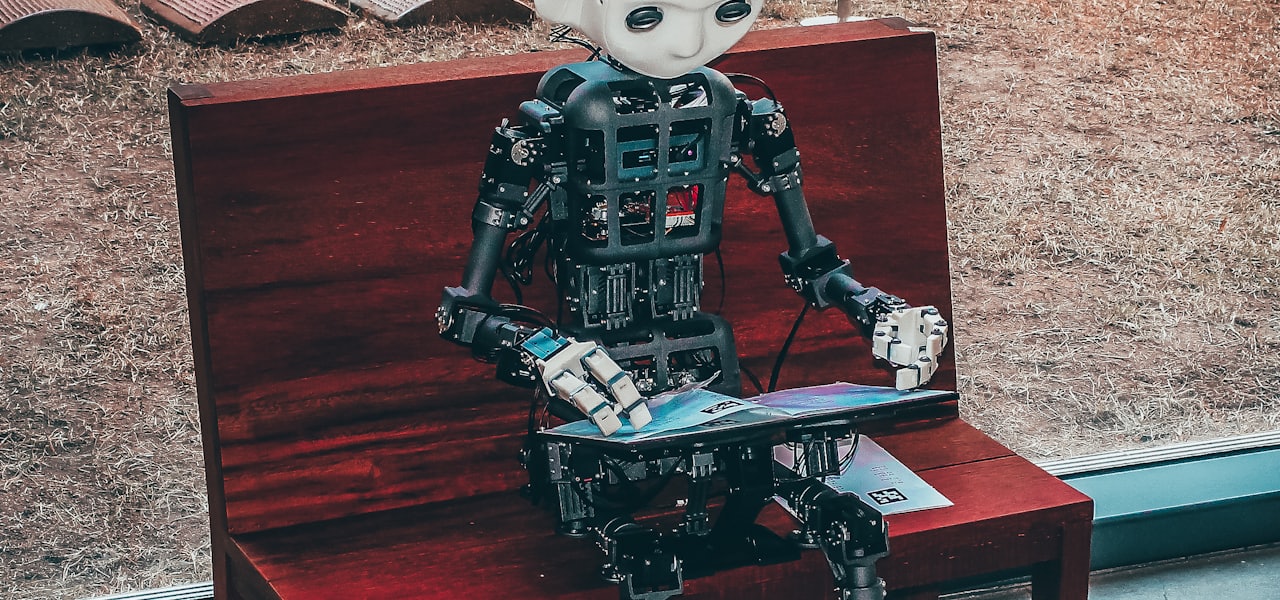
Brain technology, or self-learning know-how systems, defines a technology that employs latest findings in neuroscience. [see also neuro implants] The term was first introduced by the Artificial Intelligence Laboratory in Zurich, Switzerland, in the context of the Roboy project. Brain Technology can be employed in robots, know-how management systems and any other application with self-learning capabilities. In particular, Brain Technology applications allow the visualization of the underlying learning architecture often coined as "know-how maps". == Research and applications == The first demonstrations of BC in humans and animals took place in the 1960s when Grey Walter demonstrated use of non-invasively recorded encephalogram (EEG) signals from a human subject to control a slide projector (Graimann et al., 2010). Soon after Jacques J. Vidal coined the term brain–computer interface (BCI) in 1971, the Defense Advanced Research Projects Agency (DARPA) first starting funding brain–computer interface research and has since funded several brain–computer interface projects. That market is expected to reach a value of $1.72 billion by 2022. Brain–computer interfaces record brain activity, transmit the information out of the body, signal-process the data via algorithms, and convert them into command control signals. In 2012, a landmark study in Nature, led by pioneer Leigh Hochberg, MD, PhD, demonstrated that two people with tetraplegia were able to control robotic arms through thought when connected to the BrainGate neural interface system. The two participants were able to reach for and grasp objects in three-dimensional space, and one participant used the system to serve herself coffee for the first time since becoming paralyzed nearly 15 years prior. And in October 2020, two patients were able to wirelessly control an operating system to text, email, shop and bank using direct thought through the Stentrode brain computer interface (Journal of NeuroInterventional Surgery) in a study led by Thomas Oxley. This was the first time a brain–computer interface was implanted via the patient's blood vessels, eliminating the need for open brain surgery. Currently a number of groups are exploring a range of experimental devices using brain–computer interfaces, which have the potential to fundamentally change the way of life for patients with paralysis and a wide range of neurological disorders. These include: as Elon Musk, Facebook, and the University of California in San Francisco. The systems. This technology is also being explored as a neuromodulation device and may ultimately help diagnose and treat a range of brain pathologies, such as epilepsy and Parkinson's disease.
Reparameterization trick
The reparameterization trick (aka "reparameterization gradient estimator") is a technique used in statistical machine learning, particularly in variational inference, variational autoencoders, and stochastic optimization. It allows for the efficient computation of gradients through random variables, enabling the optimization of parametric probability models using stochastic gradient descent, and the variance reduction of estimators. It was developed in the 1980s in operations research, under the name of "pathwise gradients", or "stochastic gradients". Its use in variational inference was proposed in 2013. == Mathematics == Let z {\displaystyle z} be a random variable with distribution q ϕ ( z ) {\displaystyle q_{\phi }(z)} , where ϕ {\displaystyle \phi } is a vector containing the parameters of the distribution. === REINFORCE estimator === Consider an objective function of the form: L ( ϕ ) = E z ∼ q ϕ ( z ) [ f ( z ) ] {\displaystyle L(\phi )=\mathbb {E} _{z\sim q_{\phi }(z)}[f(z)]} Without the reparameterization trick, estimating the gradient ∇ ϕ L ( ϕ ) {\displaystyle \nabla _{\phi }L(\phi )} can be challenging, because the parameter appears in the random variable itself. In more detail, we have to statistically estimate: ∇ ϕ L ( ϕ ) = ∇ ϕ ∫ d z q ϕ ( z ) f ( z ) {\displaystyle \nabla _{\phi }L(\phi )=\nabla _{\phi }\int dz\;q_{\phi }(z)f(z)} The REINFORCE estimator, widely used in reinforcement learning and especially policy gradient, uses the following equality: ∇ ϕ L ( ϕ ) = ∫ d z q ϕ ( z ) ∇ ϕ ( ln q ϕ ( z ) ) f ( z ) = E z ∼ q ϕ ( z ) [ ∇ ϕ ( ln q ϕ ( z ) ) f ( z ) ] {\displaystyle \nabla _{\phi }L(\phi )=\int dz\;q_{\phi }(z)\nabla _{\phi }(\ln q_{\phi }(z))f(z)=\mathbb {E} _{z\sim q_{\phi }(z)}[\nabla _{\phi }(\ln q_{\phi }(z))f(z)]} This allows the gradient to be estimated: ∇ ϕ L ( ϕ ) ≈ 1 N ∑ i = 1 N ∇ ϕ ( ln q ϕ ( z i ) ) f ( z i ) {\displaystyle \nabla _{\phi }L(\phi )\approx {\frac {1}{N}}\sum _{i=1}^{N}\nabla _{\phi }(\ln q_{\phi }(z_{i}))f(z_{i})} The REINFORCE estimator has high variance, and many methods were developed to reduce its variance. === Reparameterization estimator === The reparameterization trick expresses z {\displaystyle z} as: z = g ϕ ( ϵ ) , ϵ ∼ p ( ϵ ) {\displaystyle z=g_{\phi }(\epsilon ),\quad \epsilon \sim p(\epsilon )} Here, g ϕ {\displaystyle g_{\phi }} is a deterministic function parameterized by ϕ {\displaystyle \phi } , and ϵ {\displaystyle \epsilon } is a noise variable drawn from a fixed distribution p ( ϵ ) {\displaystyle p(\epsilon )} . This gives: L ( ϕ ) = E ϵ ∼ p ( ϵ ) [ f ( g ϕ ( ϵ ) ) ] {\displaystyle L(\phi )=\mathbb {E} _{\epsilon \sim p(\epsilon )}[f(g_{\phi }(\epsilon ))]} Now, the gradient can be estimated as: ∇ ϕ L ( ϕ ) = E ϵ ∼ p ( ϵ ) [ ∇ ϕ f ( g ϕ ( ϵ ) ) ] ≈ 1 N ∑ i = 1 N ∇ ϕ f ( g ϕ ( ϵ i ) ) {\displaystyle \nabla _{\phi }L(\phi )=\mathbb {E} _{\epsilon \sim p(\epsilon )}[\nabla _{\phi }f(g_{\phi }(\epsilon ))]\approx {\frac {1}{N}}\sum _{i=1}^{N}\nabla _{\phi }f(g_{\phi }(\epsilon _{i}))} == Examples == For some common distributions, the reparameterization trick takes specific forms: Normal distribution: For z ∼ N ( μ , σ 2 ) {\displaystyle z\sim {\mathcal {N}}(\mu ,\sigma ^{2})} , we can use: z = μ + σ ϵ , ϵ ∼ N ( 0 , 1 ) {\displaystyle z=\mu +\sigma \epsilon ,\quad \epsilon \sim {\mathcal {N}}(0,1)} Exponential distribution: For z ∼ Exp ( λ ) {\displaystyle z\sim {\text{Exp}}(\lambda )} , we can use: z = − 1 λ log ( ϵ ) , ϵ ∼ Uniform ( 0 , 1 ) {\displaystyle z=-{\frac {1}{\lambda }}\log(\epsilon ),\quad \epsilon \sim {\text{Uniform}}(0,1)} Discrete distribution can be reparameterized by the Gumbel distribution (Gumbel-softmax trick or "concrete distribution") and diffusion models. In general, any distribution that is differentiable with respect to its parameters can be reparameterized by inverting the multivariable CDF function, then apply the implicit method. See for an exposition and application to the Gamma, Beta, Dirichlet, and von Mises distributions. == Applications == === Variational autoencoder === In Variational Autoencoders (VAEs), the VAE objective function, known as the Evidence Lower Bound (ELBO), is given by: ELBO ( ϕ , θ ) = E z ∼ q ϕ ( z | x ) [ log p θ ( x | z ) ] − D KL ( q ϕ ( z | x ) | | p ( z ) ) {\displaystyle {\text{ELBO}}(\phi ,\theta )=\mathbb {E} _{z\sim q_{\phi }(z|x)}[\log p_{\theta }(x|z)]-D_{\text{KL}}(q_{\phi }(z|x)||p(z))} where q ϕ ( z | x ) {\displaystyle q_{\phi }(z|x)} is the encoder (recognition model), p θ ( x | z ) {\displaystyle p_{\theta }(x|z)} is the decoder (generative model), and p ( z ) {\displaystyle p(z)} is the prior distribution over latent variables. The gradient of ELBO with respect to θ {\displaystyle \theta } is simply E z ∼ q ϕ ( z | x ) [ ∇ θ log p θ ( x | z ) ] ≈ 1 L ∑ l = 1 L ∇ θ log p θ ( x | z l ) {\displaystyle \mathbb {E} _{z\sim q_{\phi }(z|x)}[\nabla _{\theta }\log p_{\theta }(x|z)]\approx {\frac {1}{L}}\sum _{l=1}^{L}\nabla _{\theta }\log p_{\theta }(x|z_{l})} but the gradient with respect to ϕ {\displaystyle \phi } requires the trick. Express the sampling operation z ∼ q ϕ ( z | x ) {\displaystyle z\sim q_{\phi }(z|x)} as: z = μ ϕ ( x ) + σ ϕ ( x ) ⊙ ϵ , ϵ ∼ N ( 0 , I ) {\displaystyle z=\mu _{\phi }(x)+\sigma _{\phi }(x)\odot \epsilon ,\quad \epsilon \sim {\mathcal {N}}(0,I)} where μ ϕ ( x ) {\displaystyle \mu _{\phi }(x)} and σ ϕ ( x ) {\displaystyle \sigma _{\phi }(x)} are the outputs of the encoder network, and ⊙ {\displaystyle \odot } denotes element-wise multiplication. Then we have ∇ ϕ ELBO ( ϕ , θ ) = E ϵ ∼ N ( 0 , I ) [ ∇ ϕ log p θ ( x | z ) + ∇ ϕ log q ϕ ( z | x ) − ∇ ϕ log p ( z ) ] {\displaystyle \nabla _{\phi }{\text{ELBO}}(\phi ,\theta )=\mathbb {E} _{\epsilon \sim {\mathcal {N}}(0,I)}[\nabla _{\phi }\log p_{\theta }(x|z)+\nabla _{\phi }\log q_{\phi }(z|x)-\nabla _{\phi }\log p(z)]} where z = μ ϕ ( x ) + σ ϕ ( x ) ⊙ ϵ {\displaystyle z=\mu _{\phi }(x)+\sigma _{\phi }(x)\odot \epsilon } . This allows us to estimate the gradient using Monte Carlo sampling: ∇ ϕ ELBO ( ϕ , θ ) ≈ 1 L ∑ l = 1 L [ ∇ ϕ log p θ ( x | z l ) + ∇ ϕ log q ϕ ( z l | x ) − ∇ ϕ log p ( z l ) ] {\displaystyle \nabla _{\phi }{\text{ELBO}}(\phi ,\theta )\approx {\frac {1}{L}}\sum _{l=1}^{L}[\nabla _{\phi }\log p_{\theta }(x|z_{l})+\nabla _{\phi }\log q_{\phi }(z_{l}|x)-\nabla _{\phi }\log p(z_{l})]} where z l = μ ϕ ( x ) + σ ϕ ( x ) ⊙ ϵ l {\displaystyle z_{l}=\mu _{\phi }(x)+\sigma _{\phi }(x)\odot \epsilon _{l}} and ϵ l ∼ N ( 0 , I ) {\displaystyle \epsilon _{l}\sim {\mathcal {N}}(0,I)} for l = 1 , … , L {\displaystyle l=1,\ldots ,L} . This formulation enables backpropagation through the sampling process, allowing for end-to-end training of the VAE model using stochastic gradient descent or its variants. === Variational inference === More generally, the trick allows using stochastic gradient descent for variational inference. Let the variational objective (ELBO) be of the form: ELBO ( ϕ ) = E z ∼ q ϕ ( z ) [ log p ( x , z ) − log q ϕ ( z ) ] {\displaystyle {\text{ELBO}}(\phi )=\mathbb {E} _{z\sim q_{\phi }(z)}[\log p(x,z)-\log q_{\phi }(z)]} Using the reparameterization trick, we can estimate the gradient of this objective with respect to ϕ {\displaystyle \phi } : ∇ ϕ ELBO ( ϕ ) ≈ 1 L ∑ l = 1 L ∇ ϕ [ log p ( x , g ϕ ( ϵ l ) ) − log q ϕ ( g ϕ ( ϵ l ) ) ] , ϵ l ∼ p ( ϵ ) {\displaystyle \nabla _{\phi }{\text{ELBO}}(\phi )\approx {\frac {1}{L}}\sum _{l=1}^{L}\nabla _{\phi }[\log p(x,g_{\phi }(\epsilon _{l}))-\log q_{\phi }(g_{\phi }(\epsilon _{l}))],\quad \epsilon _{l}\sim p(\epsilon )} === Dropout === The reparameterization trick has been applied to reduce the variance in dropout, a regularization technique in neural networks. The original dropout can be reparameterized with Bernoulli distributions: y = ( W ⊙ ϵ ) x , ϵ i j ∼ Bernoulli ( α i j ) {\displaystyle y=(W\odot \epsilon )x,\quad \epsilon _{ij}\sim {\text{Bernoulli}}(\alpha _{ij})} where W {\displaystyle W} is the weight matrix, x {\displaystyle x} is the input, and α i j {\displaystyle \alpha _{ij}} are the (fixed) dropout rates. More generally, other distributions can be used than the Bernoulli distribution, such as the gaussian noise: y i = μ i + σ i ⊙ ϵ i , ϵ i ∼ N ( 0 , I ) {\displaystyle y_{i}=\mu _{i}+\sigma _{i}\odot \epsilon _{i},\quad \epsilon _{i}\sim {\mathcal {N}}(0,I)} where μ i = m i ⊤ x {\displaystyle \mu _{i}=\mathbf {m} _{i}^{\top }x} and σ i 2 = v i ⊤ x 2 {\displaystyle \sigma _{i}^{2}=\mathbf {v} _{i}^{\top }x^{2}} , with m i {\displaystyle \mathbf {m} _{i}} and v i {\displaystyle \mathbf {v} _{i}} being the mean and variance of the i {\displaystyle i} -th output neuron. The reparameterization trick can be applied to all such cases, resulting in the variational dropout method.
Business process automation
Business process automation (BPA), also known as business automation, refers to the technology-enabled automation of business processes. == Development approaches == There are three main approaches to developing BPA: traditional business process automation involves developing BPA software in a programming language for integrating relevant applications in the digital ecosystem to execute a given process; robotic process automation uses software robots (also called agents, bots, or workers) to emulate human-computer interaction for executing a combination of processes, activities, transactions, and tasks in one or more unrelated software systems; hyperautomation (also called intelligent automation (IA), intelligent process automation (IPA), integrated automation platform (IAP), and cognitive automation (CA) combines business process automation, artificial intelligence (AI), and machine learning (ML) to discover, validate, and execute organizational processes automatically with no or minimal human intervention. == Deployment == BPA toolsets vary in capability. With the increasing adoption of artificial intelligence (AI), organizations are implementing AI-driven technologies that can process natural language, interpret unstructured datasets, and interact with users. These systems are designed to adapt to new types of problems with reduced reliance on human intervention. == Business process management implementation == A business process management system differs from BPA. However, it is possible to implement automation based on a BPM implementation. The methods to achieve this vary, from writing custom application code to using specialist BPA tools. == Robotic process automation == Robotic process automation (RPA) involves the deployment of attended or unattended software agents in an organization's environment. These software agents, or robots, are programmed to perform predefined structured and repetitive sets of business tasks or processes. Robotic process automation is designed to streamline workflows by delegating repetitive tasks to software agents, allowing human workers to focus on more complex and strategic activities. BPA providers typically focus on different industry sectors, but the underlying approach is generally similar in that they aim to provide the shortest route to automation by interacting with the user interface rather than modifying the application code or database behind it. == Use of artificial intelligence == Artificial intelligence software robots are used to handle unstructured data sets (like images, texts, audios) and are often deployed after implementing robotic process automation. They can, for instance, generate an automatic transcript from a video. The combination of automation and artificial intelligence (AI) enables autonomy for robots, along with the capability to perform cognitive tasks. At this stage, robots can learn and improve processes by analyzing and adapting them.
Absher (application)
Absher (Arabic: أبشر ‘Absher, roughly meaning "good tidings" or "yes, done") is a smartphone application and web portal which allows citizens and residents of Saudi Arabia to use a variety of governmental services. Amongst several other services with the Absher app, it can be used to apply for jobs and Hajj permits, passport info can be updated, and electronic crimes can be reported. The application provides around 280 services for residents of Saudi Arabia including but not limited to making appointments, renewing passports, residents' cards, IDs, driver's licenses and others, and, controversially, enables Saudi men to track the whereabouts of women they control as part of the country's male guardianship system. The app can be downloaded from the Google Play Store and Apple App Store and is supplied by the Saudi Interior Ministry. According to the Ministry of the Interior, Absher has more than 20 million users. As of February 2019, Absher has been downloaded 4.2 million times from the App Store. Some services provided through Absher can also be accessed through the website absher.sa. In March 2021, Saudi Arabia launched the digital version of the Absher for individuals app through which the users can download a copy of their digital ID. Then, new services were added to the platform such as online birth and death registration services, requesting amendments to academic credentials, correcting names in English and marital status and requesting civil records of children. == Impact on women's rights == The app has been criticized by various human rights activists, human rights organisations and international communities. The US and European countries have also condemned the app and urged the kingdom to end its male guardianship system. Absher gained media attention in 2019 for its functions supporting the Saudi policy of male guardianship following an investigation by Business Insider. The app allows for designated guardians to receive notifications if a woman under their guardianship passes through an airport and subsequently gives them the option to withdraw her right to travel. In a few cases, this system has been circumvented by women who have been able to gain control over its settings and use it to allow themselves to travel. US Senator Ron Wyden of Oregon wrote a letter to the CEO's of Apple and Google, criticizing the app and demanding for its removal immediately. Wyden said "American companies should not enable or facilitate the Saudi government's patriarchy," and called the Saudi system of control over women "abhorrent". According to the EU lawmakers, current rules imposed over the women by the Saudi government make women “second-class citizens”. The lawmakers also asked the EU states to continue to build pressure on Riyadh so as to improve the conditions of women and human rights. Amnesty International and Human Rights Watch accused Apple and Google of helping "enforce gender apartheid" by hosting the app. US congresswomen Rep. Katherine Clark and Rep. Carolyn B. Maloney condemned the kingdom's male guardianship system that reflected from the app, calling Absher a "patriarchal weapon" and asking for its removal. In response to the criticism received by Absher, Apple chief executive officer Tim Cook stated in February 2019 that he intended to investigate the situation. Similarly, Google announced that it would also review the application. After a prompt review, Google declined to remove the app from Google Play, citing that it did not violate the agreed upon terms and conditions of the store. Saudi doctor Khawla Al-Kuraya supported this app an editorial in Bloomberg News. Kuraya wrote that Absher helped Saudi women avoid governmental bureaucracy as it allows their male guardians to process their travel permits anywhere and anytime through Absher. Although she believes that the guardianship system needs to be reconsidered, she thinks that Absher is an important step towards facilitating women-guardians related issues in Saudi Arabia. Absher manager Atiyah Al-Anazy announced in 2019 that two million women were using the application in Saudi Arabia to facilitate their transactions. Some female users stated that the application has made their movement and travel-related issues easier. New measures were introduced that year to allow Saudi women above the age of 18 to travel without their male guardians, which ultimately released male authoritative rights on women. A law was subsequently passed allowing women over the age of 21 to receive a passport and travel without prior male permission.
Feature (machine learning)
In machine learning and pattern recognition, a feature is an individual measurable property or characteristic of a data set. Choosing informative, discriminating, and independent features is crucial to producing effective algorithms for pattern recognition, classification, and regression tasks. Features are usually numeric, but other types such as strings and graphs are used in syntactic pattern recognition, after some pre-processing step such as one-hot encoding. The concept of "features" is related to that of explanatory variables used in statistical techniques such as linear regression. == Feature types == In feature engineering, two types of features are commonly used: numerical and categorical. Numerical features are continuous values that can be measured on a scale. Examples of numerical features include age, height, weight, and income. Numerical features can be used in machine learning algorithms directly. Categorical features are discrete values that can be grouped into categories. Examples of categorical features include gender, color, and zip code. Categorical features typically need to be converted to numerical features before they can be used in machine learning algorithms. This can be done using a variety of techniques, such as one-hot encoding, label encoding, and ordinal encoding. The type of feature that is used in feature engineering depends on the specific machine learning algorithm that is being used. Some machine learning algorithms, such as decision trees, can handle both numerical and categorical features. Other machine learning algorithms, such as linear regression, can only handle numerical features. == Classification == A numeric feature can be conveniently described by a feature vector. One way to achieve binary classification is using a linear predictor function (related to the perceptron) with a feature vector as input. The method consists of calculating the scalar product between the feature vector and a vector of weights, qualifying those observations whose result exceeds a threshold. Algorithms for classification from a feature vector include nearest neighbor classification, neural networks, and statistical techniques such as Bayesian approaches. == Examples == In character recognition, features may include histograms counting the number of black pixels along horizontal and vertical directions, number of internal holes, stroke detection and many others. In speech recognition, features for recognizing phonemes can include noise ratios, length of sounds, relative power, filter matches, logarithmic Mel-scale spectral vectors and Mel-frequency cepstral coefficients, which represent the frequency characteristics of audio signals. In spam detection algorithms, features may include the presence or absence of certain email headers, the email structure, the language, the frequency of specific terms, the grammatical correctness of the text. In computer vision, there are a large number of possible features, such as edges and objects. == Feature vectors == In pattern recognition and machine learning, a feature vector is an n-dimensional vector of numerical features that represent some object. Many algorithms in machine learning require a numerical representation of objects, since such representations facilitate processing and statistical analysis. When representing images, the feature values might correspond to the pixels of an image, while when representing texts the features might be the frequencies of occurrence of textual terms. Feature vectors are equivalent to the vectors of explanatory variables used in statistical procedures such as linear regression. Feature vectors are often combined with weights using a dot product in order to construct a linear predictor function that is used to determine a score for making a prediction. The vector space associated with these vectors is often called the feature space. In order to reduce the dimensionality of the feature space, a number of dimensionality reduction techniques can be employed. Higher-level features can be obtained from already available features and added to the feature vector; for example, for the study of diseases the feature 'Age' is useful and is defined as Age = 'Year of death' minus 'Year of birth' . This process is referred to as feature construction. Feature construction is the application of a set of constructive operators to a set of existing features resulting in construction of new features. Examples of such constructive operators include checking for the equality conditions {=, ≠}, the arithmetic operators {+,−,×, /}, the array operators {max(S), min(S), average(S)} as well as other more sophisticated operators, for example count(S, C) that counts the number of features in the feature vector S satisfying some condition C or, for example, distances to other recognition classes generalized by some accepting device. Feature construction has long been considered a powerful tool for increasing both accuracy and understanding of structure, particularly in high-dimensional problems. Applications include studies of disease and emotion recognition from speech. == Selection and extraction == The initial set of raw features can be redundant and large enough that estimation and optimization is made difficult or ineffective. Therefore, a preliminary step in many applications of machine learning and pattern recognition consists of selecting a subset of features, or constructing a new and reduced set of features to facilitate learning, and to improve generalization and interpretability. Extracting or selecting features is a combination of art and science; developing systems to do so is known as feature engineering. It requires the experimentation of multiple possibilities and the combination of automated techniques with the intuition and knowledge of the domain expert. Automating this process is feature learning, where a machine not only uses features for learning, but learns the features itself.